
Using Postsecondary Data Resources
The resources on this page are free to download and represent a collection of best practices for using postsecondary outcomes data to improve pathways for students. Have a resource you'd like to share with the CoP? Upload files.
Featured Resources
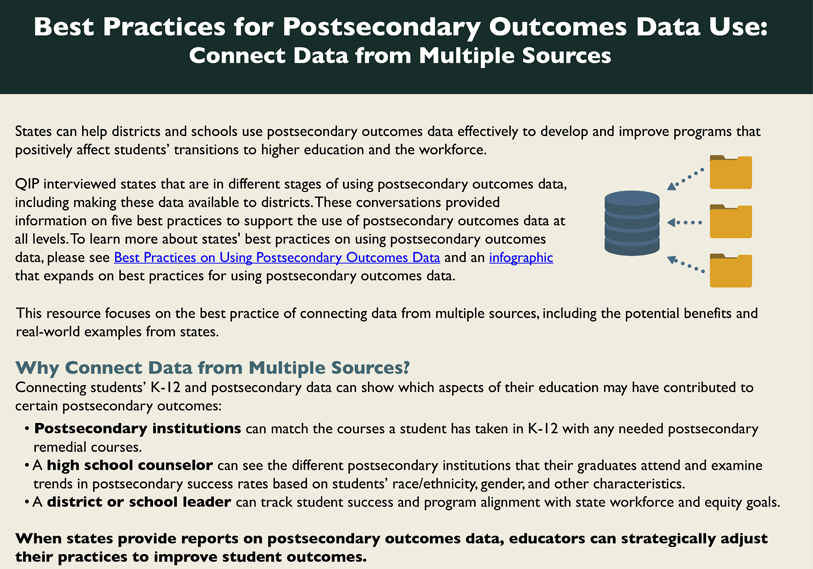

2025 Dual Enrollment Special Report
In this report, NSWERS describes the status of dual enrollment in Nebraska and the impacts of dual enrollment participation on high school and college educational outcomes.
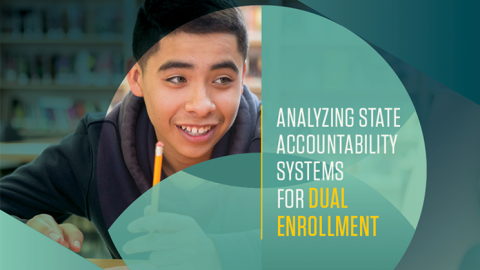
Analyzing State Accountability Systems for Dual Enrollment
This brief by Advance CTE and the College in High School Alliance examines how states measure and value dual enrollment within accountability systems, drawing on findings from Making Career Readiness Count: A 2025 Update to highlight trends, equity implications, and examples from Alabama, Tennessee, and Utah.
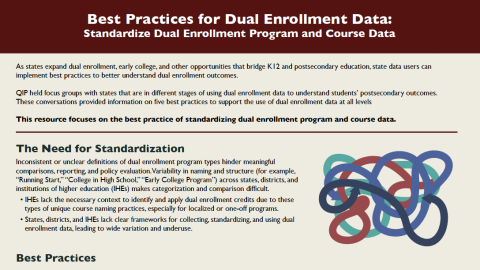
Best Practices for Dual Enrollment Data: Standardize Dual Enrollment Program and Course Data
This resource focuses on the best practice of standardizing dual enrollment program and course data.
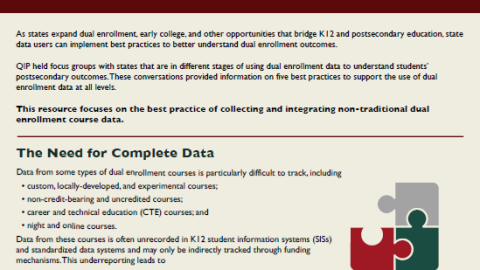
Best Practices for Dual Enrollment Data: Collect and Integrate Non-Traditional Course Data
This resource focuses on best practices for collecting and integrating non-traditional course data for dual enrollment purposes
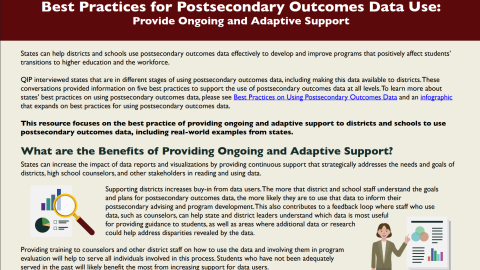
Best Practices for Postsecondary Outcomes Data Use: Provide Ongoing and Adaptive Support
This resource focuses on the best practice of standardizing dual enrollment program and course data.
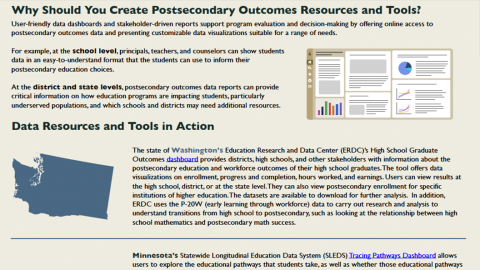
Best Practices for Postsecondary Outcomes Data Use: Develop Data Resources & Tools
This resource focuses on the best practice of developing data resources and tools, including real-world examples from states.
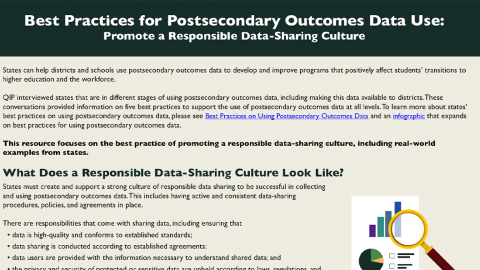
Best Practices for Postsecondary Outcomes Data Use: Promote a Responsible Data-Sharing Culture
This resource focuses on the best practice of promoting a responsible data-sharing culture, including real-world examples from states.
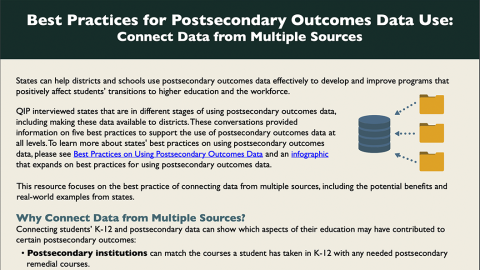
Best Practices for Postsecondary Outcomes Data Use: Connect Data from Multiple Sources
This infographic shows examples of how three states, Massachusetts, Michigan, and Minnesota, integrate K–12, postsecondary, and workforce data to track college readiness, reduce remediation, and support equity goals.
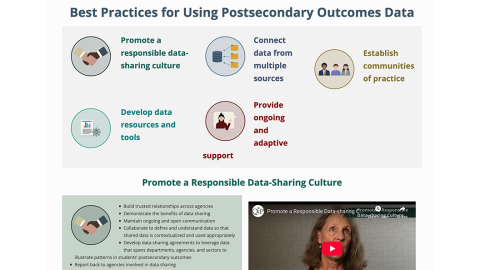
Best Practices for Using Postsecondary Outcomes Data
This page details 5 best practices for using postsecondary outcomes data, including shared governance, data integration, visual tools, and peer learning through communities of practice. Resources include infographics, videos, and other reports and tools.
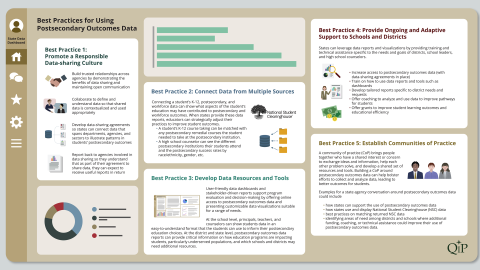
Best Practices for Using Postsecondary Outcomes Data
This infographic Infographic summarizes five best practices for using postsecondary outcomes data: data-sharing culture, system linkages, tool development, capacity building, and communities of practice.