This infographic shows examples of how three states, Massachusetts, Michigan, and Minnesota, integrate K–12, postsecondary, and workforce data to track college readiness, reduce remediation, and support equity goals.
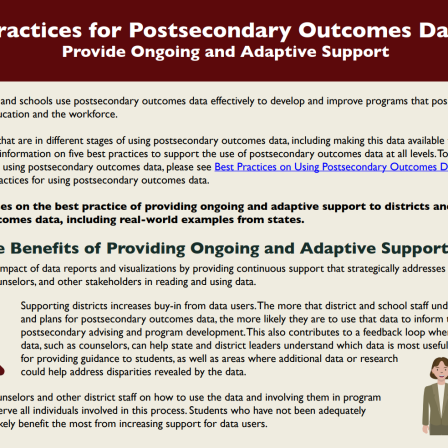
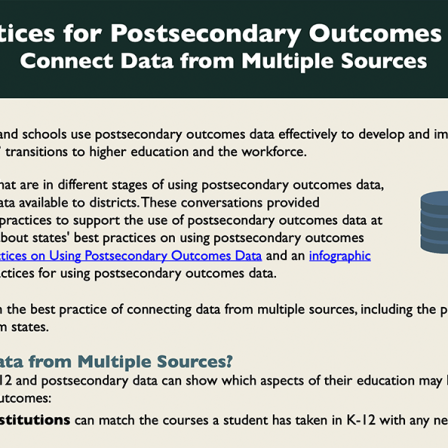
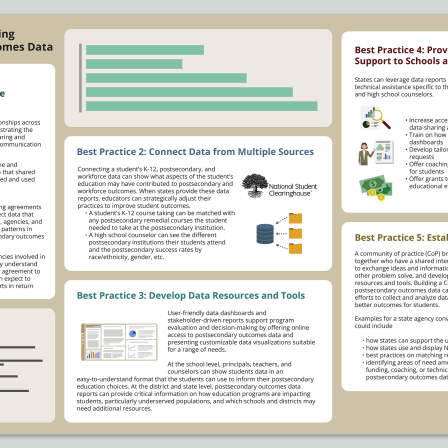
This infographic Infographic summarizes five best practices for using postsecondary outcomes data: data-sharing culture, system linkages, tool development, capacity building, and communities of practice.
This toolkit contains guidance, best practices and tools that CTE leaders can use to create communications that help stakeholders better understand and act on CTE data.
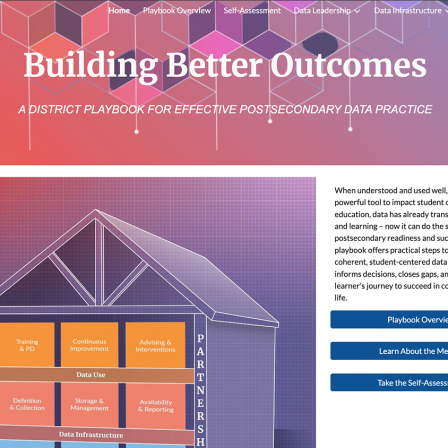
This playbook offers practical steps to build a coherent, student-centered data ecosystem that informs decisions, closes gaps, and supports every learner’s journey to succeed in college, career, and life.
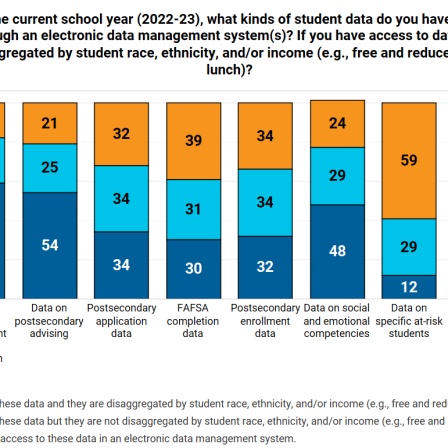
This article highlights surprising insights from the RAND Corporation’s survey of school leaders on college and career readiness. It focuses on low data access, advising gaps, and barriers rooted in school-level capacity.
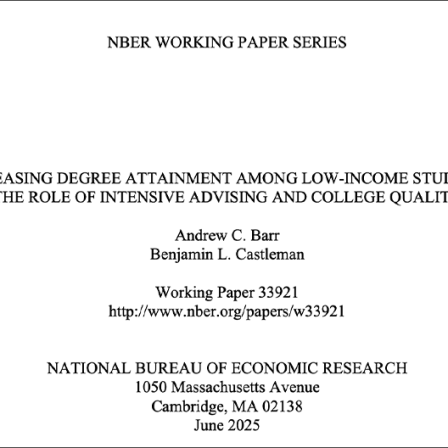
Increasing Degree Attainment Among Low-Income Students: The Role of Intensive Advising and College Quality Title: Increasing Degree Attainment Among Low-Income Students: The Role of Intensive Advising and College Quality Type: Working Paper Series Author: National Bureau of Economic Research Date…